Speech-language Therapy (SLT)

Treatment for children and adults with stammering, misarticulation, voice problems, or other communication hurdles.

Speech-language therapy helps children and adults improve communication—from first words and clarity of speech to understanding language and using it effectively. Our sessions are tailored to each person’s needs and goals.
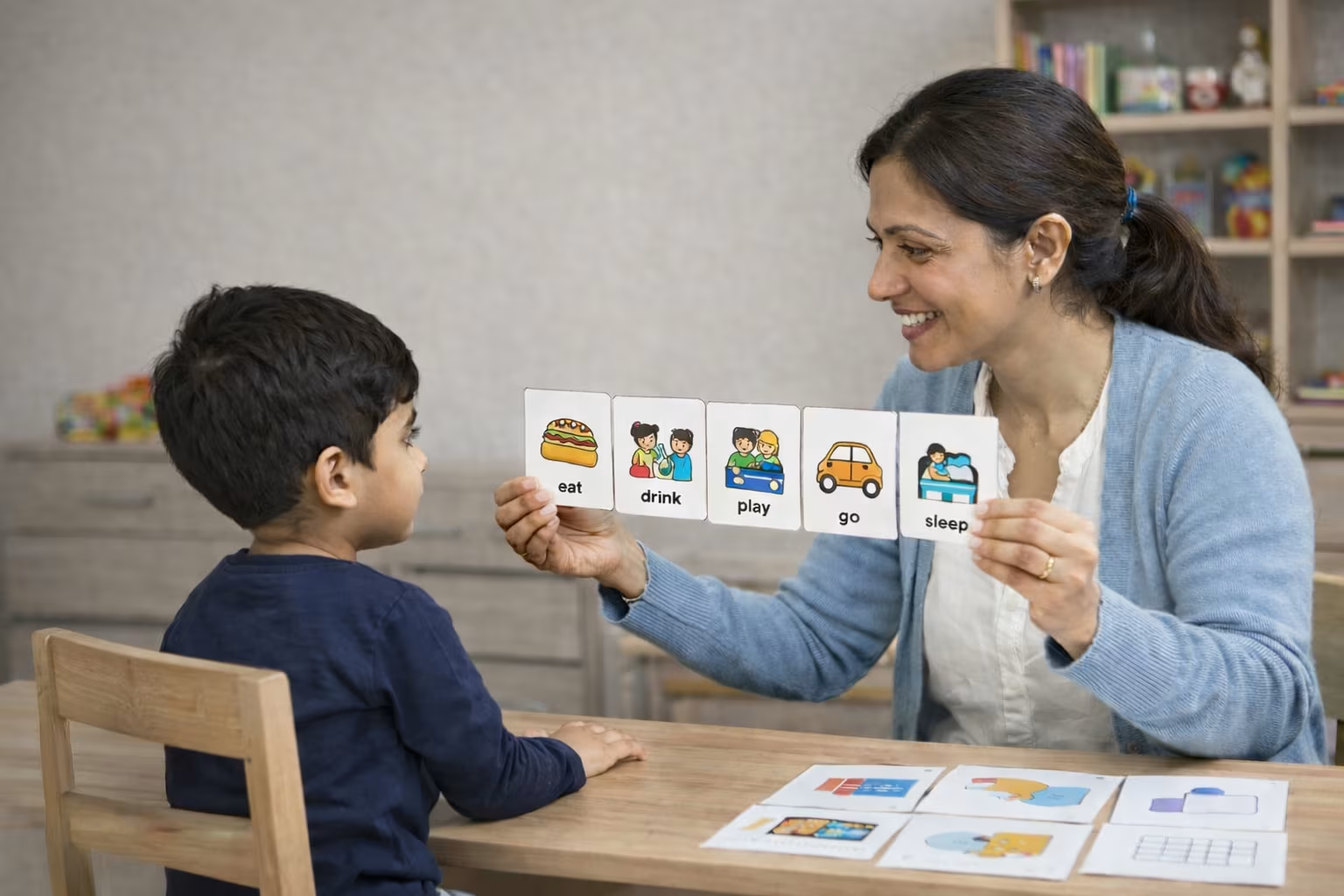
Speech Therapy Session

Conditions We Treat

Speech-language therapy supports a wide range of developmental and communication challenges.

Speech Delay

Supporting children who speak later or struggle with clarity.

Autism Spectrum Support

Improving communication, social interaction, and daily functioning.

Developmental Delays

Building foundational communication and learning skills.

Behaviour & Communication

Addressing frustration linked to communication gaps.

Stammering

A speech disorder affecting about 1% of adults. We use an integrated approach of speech therapy and behavioural therapy for effective treatment.

Learn more

Voice Problems

Voice assessment and therapy for impaired voice production. We help with vocal hygiene, vocal fold approximation, and professional voice training.

Learn more

Mispronunciation

Speech therapy for articulation, phonological, and apraxia-related errors. Effective treatment for children who continue to make speech errors beyond four years.

Learn more

Aphasia

Language disorder after stroke or head injury. Therapy aims to rewire the brain and restore expression, understanding, reading, and writing abilities.

Learn more

Social Skills Difficulties

Supporting interaction, play, and expressive skills.

Frequently Asked Questions

When should I consider speech therapy for my child?
If your child is not saying words by 18 months, has fewer than 50 words by 2 years, or is hard to understand after age 4, an evaluation is recommended. Other signs include difficulty following instructions, limited eye contact during conversation, or frustration when trying to communicate. Early intervention—ideally before age 3—often leads to better outcomes.
How long does speech therapy take to show results?
Progress varies based on the condition, age, and consistency of therapy. Many families notice small improvements within a few weeks—such as clearer sounds or new words. Meaningful change often takes several months of regular sessions. Consistency at home, as advised by your therapist, significantly speeds up progress.
What happens in a typical speech therapy session?
Sessions are tailored to each person’s goals. For children, therapy often looks like play—using toys, pictures, and games to practise sounds, words, and sentences. For adults (e.g. stammering or voice issues), sessions may include breathing exercises, fluency techniques, or vocal training. The therapist will also give you activities to practise at home.
Can adults benefit from speech therapy?
Yes. Speech-language therapy helps adults with stammering, voice problems (e.g. teachers, singers), aphasia after stroke or head injury, and articulation issues that persist from childhood. It is never too late to improve communication skills.
Is speech therapy only for pronunciation problems?
No. Speech-language therapy covers articulation (pronunciation), but also language (understanding and using words), fluency (stammering), voice, social communication, and swallowing. We treat the full range of communication challenges.
How can I support my child's speech development at home?
Talk to your child often, read together, and give them time to respond. Repeat and expand on what they say (e.g. if they say “ball,” you say “Yes, a big red ball”). Follow your therapist’s home practice suggestions—even 10–15 minutes daily can make a difference. Avoid correcting every error; focus on modelling correct speech naturally.
What's the difference between a speech delay and a language delay?
A speech delay means difficulty producing sounds clearly—words may be hard to understand. A language delay means difficulty understanding or using words and sentences (e.g. limited vocabulary, trouble following instructions, or forming sentences). A child can have one, both, or neither. An assessment helps identify which areas need support.

A simple conversation can help you decide the next step.